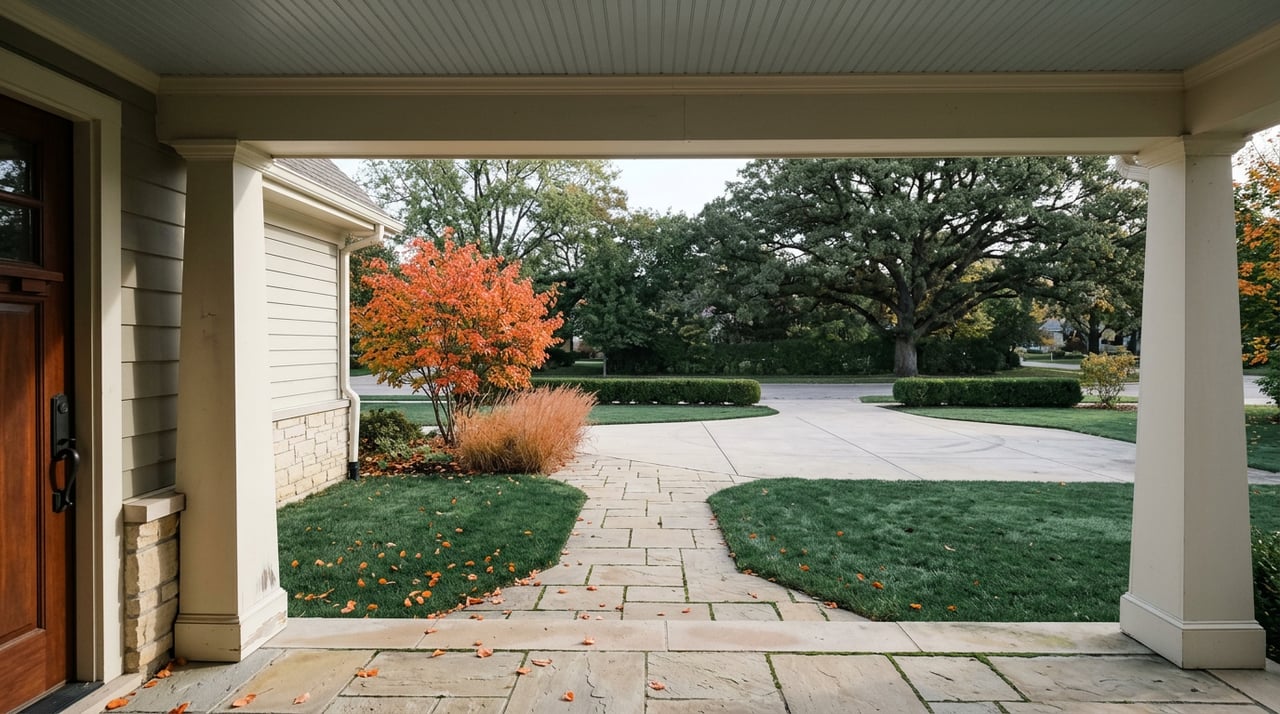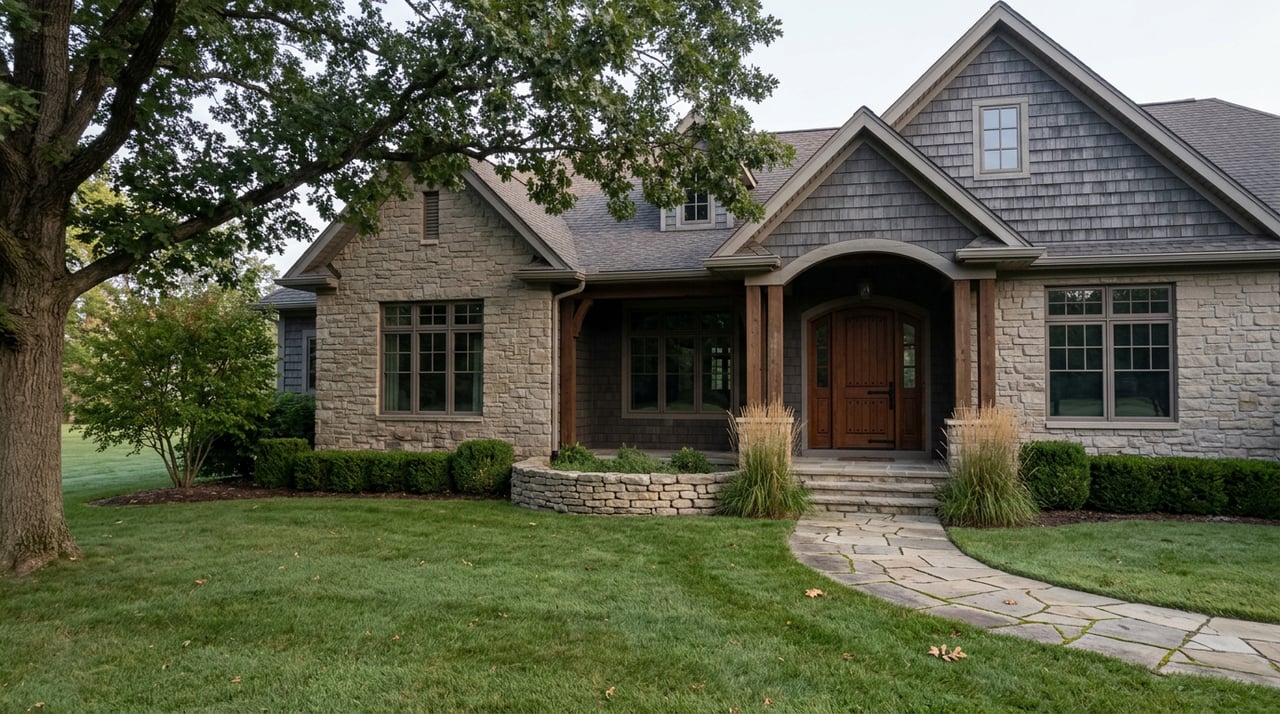
Drive past Willemoore and Wiggins on a weekday afternoon and you'll likely see it: a car slowing to a crawl, sometimes circling the block twice. For more than a year now, that corner has been an empty lot with a few roped-off oak trees standing over bare dirt. Before August 2025, it held the house that gave this city its name.
The scene when the demolition actually happened was quiet by Illinois standards. No wrecking ball, no single dramatic collapse. A Kobelco excavator worked the old Leland farmhouse apart in sections over two days, pulling metal and wood and glass into separate piles while a crew from Modern Paving, Scrap & Demolition hauled brick to a landfill. Neighbors walked over to watch. Some brought the Illinois Times article about the impending demolition and left it on the front seat of the car, as if the clipping were proof they weren't just gawking.
A City Named for a House That Wasn't Protected
Here's the detail that should surprise anyone who assumes a place this well-kept has rules to match: nothing legally stopped that demolition, and nothing could have. Leland Grove has no landmark ordinance, no historic register, no mechanism that would have let a preservationist step in and make a competing offer before the excavator arrived. When a state environmental inspector showed up on site, drawn by a resident's last-minute call, she confirmed as much on the spot: residential demolition sits outside the Illinois EPA's jurisdiction entirely. The house came down because the owner, Frank Vala, was legally entitled to take it down, full stop.
Vala's plan for the land is almost anticlimactic given the history sitting on it. No new house. He intends to fold the lot into the yard of his adjacent property. He did offer the small brick summer kitchen behind the main house to a historic preservation group willing to relocate it, which is the one piece of the story that ends somewhere other than a truck bed.
One longtime resident, Karen Ackerman Witter, who has lived in Leland Grove for 34 years and spent much of that time walking the streets around Washington Park, wrote about standing at the corner as the house came down. Her closing line captured what a lot of neighbors were thinking that week:
"Leland Grove should change its name to simply, The Grove."
It reads like a joke until you realize how literally true it is. The farm that gave the city its name belonged to Jerome Leland, a 19th-century farmer who hosted local gatherings on his land and supplied produce to Springfield's old Leland Hotel. The farmhouse was the last physical thread connecting that history to a specific address. Now the thread is a lawn.
Built to Pave Roads, Not Guard Houses
The gap in protection makes more sense once you look at why Leland Grove incorporated in the first place. In 1950, residents of a handful of Woodside Township subdivisions voted to form their own city government for one practical reason: the roads were dirt and Springfield wasn't fixing them. The new council paved nine miles of streets in its first year and a half, an achievement that also left the fledgling city in a serious budget hole. The founding document, in other words, was about asphalt, not architecture.
That practical, service-first character stuck. The city runs on a six-member council, each member representing a geographical ward, handling the things a city of roughly 1,400 residents actually needs: streets, a small police department, water and sewer decisions. It has never needed a historic preservation code because nobody building the place in 1950 was thinking about protecting buildings that didn't exist yet. Seven decades later, that same lean structure means there's no ordinance standing between an old house and an owner with an excavator.
The independence baked into that structure runs deep. In 1957, Springfield tried to annex Leland Grove. City leaders on both sides put it to a vote. Springfield's own residents favored the merger 5 to 1. Grovers voted it down 3 to 1. Springfield responded by pulling fire protection from Leland Grove entirely, and the city went without it until 1959. That's not a footnote about municipal politics. It's evidence that this community has always been willing to accept real costs to keep its own governance small and local, even when the costs are literal fire risk. The same self-reliance that has kept Leland Grove a distinct city for 76 years is the reason nobody ever got around to writing a rule that could have saved the Leland house.
What Actually Endures Here, and Why
If you want to see what does survive in Leland Grove over a century, look a short drive from that empty corner to Illini Country Club. The course opened in 1906, designed by Tom Bendelow, and it still plays essentially the same par-71 layout that has hosted U.S. Open qualifying rounds and past State Amateur competitions. It has stood on the same ground for a century without a single preservation statute protecting it.
What's kept it standing isn't law. It's continuity of private ownership and a membership willing to reinvest in the same ground year after year. The club endures because the people who control it have chosen, repeatedly, to keep it as it is. The farmhouse didn't have that. It had a single owner who decided the opposite, and there was no institutional counterweight to slow him down.
That contrast points to the actual mechanism protecting whatever character survives in Leland Grove today:
- Private ownership choices, not public ordinances, decide what stays standing here.
- The mature trees left circled in yellow tape during the demolition survived because the excavator crew was instructed to spare them, not because any tree ordinance required it.
- Washington Park, which borders the city and hosts the walking and running routes residents like Witter have used for decades, stays public and protected because it's owned by the Springfield park system, not because Leland Grove extended any protection of its own.
Put together, it's a neighborhood where public continuity exists only where a public entity already owns the ground. Everything else, including a house that predates the city by decades, rests entirely on the judgment of whoever holds the deed that week.
What This Means for Anyone Walking These Streets
If there's a particular house on Willemoore, or a stand of trees on Wiggins, or a stretch of Cherry Road or Laurel Street that you'd genuinely mourn losing, it's worth knowing there's nothing on the books that guarantees it'll be there next year. That's not a reason for alarm in a city this stable. Turnover here is slow, ownership tends to run long, and the community's habit of showing up to watch when something does change suggests people are paying attention in ways that quietly matter even without an ordinance behind them.
But the corner at Willemoore and Wiggins is a useful reminder for anyone who walks these blocks regularly, whether on a morning loop toward Washington Park or a dog walk down a side street that rarely sees traffic. The character of Leland Grove isn't held in place by city code. It's held in place by the people who currently own the pieces of it, one lot at a time. Some of them will keep things exactly as they've always been, the way generations of Illini Country Club members have. Others will make the call Frank Vala made, and the neighborhood will just have to slow down, watch, and adjust to the new version of the corner.
If you're curious what your own piece of that history is worth right now, or you just want a straight read on how a specific address in Leland Grove fits into the broader Springfield market, Melissa Vorreyer and her team track this city closely, house by house. Get your instant home valuation and see where your address stands today.