Chatham is a village in Sangamon County, Illinois, located approximately 2.8 miles south of Springfield along Illinois Route 4 — the original 1926 alignment of historic U.S. Route 66. With a population approaching 15,000 and a motto of "Where Families Grow," the village has been one of the most consistently expanding communities in central Illinois over the past two decades, growing by more than 5,800 residents since 2000.
The draw is straightforward. Chatham sits close enough to Springfield to make a daily commute genuinely manageable — most residents reach the state capital in around 20 minutes — while offering a village-scale residential environment, newer subdivision housing, a complete preK-through-12 public school district, and property taxes and home prices that remain among the most accessible in the broader Springfield metro area.
This guide covers the history, lifestyle, market data, schools, amenities, neighborhoods, and investment picture for Chatham, Illinois.
| Key Facts: Chatham, IL | |
|---|---|
| County | Sangamon County |
| Community Type | Incorporated village with a mayor-trustee government |
| Location | Sangamon County, approximately 2.8 miles south of Springfield along Illinois Route 4; part of the Springfield Metropolitan Statistical Area |
| Population | 14,355 (July 2024 estimate); 2020 Census recorded 14,415; 2026 projection of 14,751 |
| Village Area | Approximately 7.37 square miles total |
| Median Age | 35.4 years |
| Median Household Income | $106,773 (2024 data); average per capita income $68,038 |
| Incorporated | 1874; village named October 22, 1836 for the Chatham Presbyterian Church |
| School District | Ball Chatham Community Unit School District No. 5 (preK–12) |
| ZIP Codes | 62629, 62536 |
| Highway Access | Illinois Route 4 (Village Road / original Route 66 alignment), Interstate 55 (approximately 5–8 min east), Interstate 72 nearby; direct access to Springfield via Route 4 north |
| Nearby Cities | Springfield (north, approximately 2.8 miles), Glenarm (south), Auburn (southwest) |
| Village Motto | "Where Families Grow" |
Chatham Lifestyle Snapshot
An editorial snapshot of the village's strongest lifestyle attributes, not a statistical ranking.
Chatham is one of the fastest-growing villages in Sangamon County, adding more than 5,800 residents between 2000 and 2023. Its median age of 35.4 years is noticeably younger than most Illinois suburbs, reflecting a population made up largely of young families. According to demographic data, 61% of residents aged 15 and older are married, and 58% have children under 18 — figures that put Chatham firmly in the family-oriented category among central Illinois communities.
The village's racial composition is approximately 89.5% White, 3.3% Hispanic, and smaller percentages of Asian, Black, and multiracial residents. The homeownership culture is strong, with single-family detached homes making up approximately 77.4% of all housing units. The poverty rate sits at 3.3%, well below both the state and national averages, and the median household income of $106,773 places Chatham comfortably above the Illinois median.
Chatham sits along the original 1926 alignment of U.S. Route 66, now Illinois Route 4. That road — and the 1852 arrival of the railroad — defined the village's commercial identity for over a century. Today the Route 4 corridor connects residents directly to Springfield and anchors the village's commercial strip, grocery access, and everyday services.
The land that became Chatham was open central Illinois prairie between Lick Creek and Panther Creek in Sangamon County when the first American settlers arrived in the 1820s and 1830s. The area was organized as a named settlement in 1836, when the village received its name on October 22 of that year. The name derives from the Chatham Presbyterian Church, organized the previous year by Reverends Dewey Whitney and T.A. Spilman and named after the Chatham Presbyterian Church in Pittsylvania, Virginia. The name itself traces to an English place-name meaning "village by the forest" in a combination of Gaelic and Old English roots.
The post office opened in 1840 under the name "Lick Creek" before being changed to Chatham in 1841. Farmers and their families settled the area through the 1840s and 1850s, drawn by the highly fertile prairie soil. The arrival of the railroad in 1852 accelerated Chatham's development, connecting it to Springfield and the broader Illinois commerce network. At its peak in the early 20th century, 12 passenger trains passed through Chatham daily. The 1902 railroad depot building, restored in 1991, survives today as the Chatham Railroad Museum at 100 N. State Street.
The village was formally incorporated in 1874. Route 66 was aligned through Chatham in 1926 following the existing State Bond Issue-4 highway designation, bringing travelers, service stations, and roadside commerce to the village. The alignment was short-lived, as the 1930 realignment of Route 66 shifted the road three miles to the east through Glenarm, bypassing Chatham's original commercial corridor. The Illinois Route 4 designation remained, however, and continues to serve as Chatham's primary arterial connection to Springfield.
Through the second half of the 20th century, Chatham transitioned from an agricultural service town into a Springfield suburb. New residential subdivisions began filling the prairie south and west of the original village core from the 1970s onward, and growth accelerated sharply in the 1990s and 2000s as families sought newer housing outside Springfield's city limits. That suburban growth pattern continues today, with active new subdivision development adding homes across the village each year.
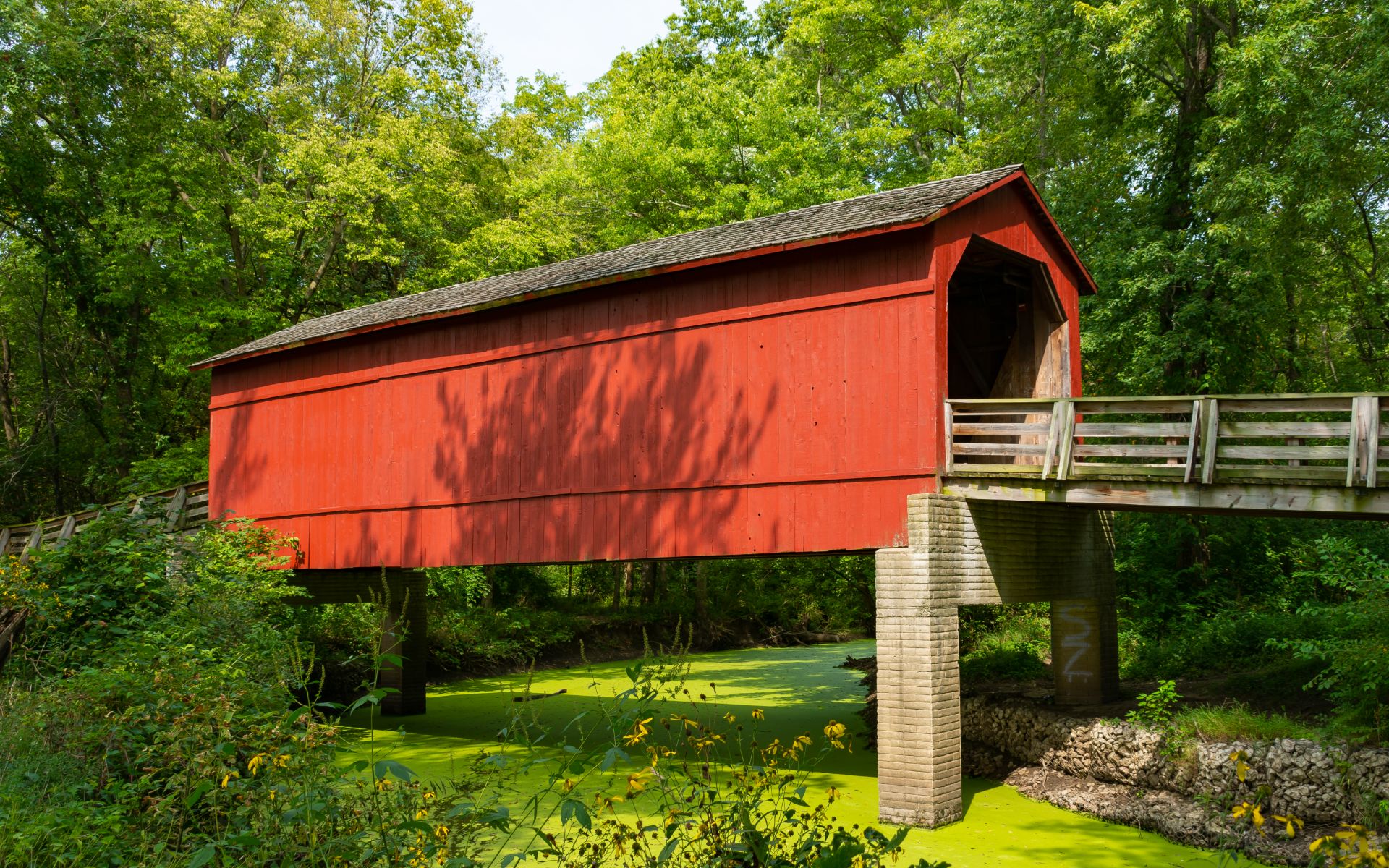
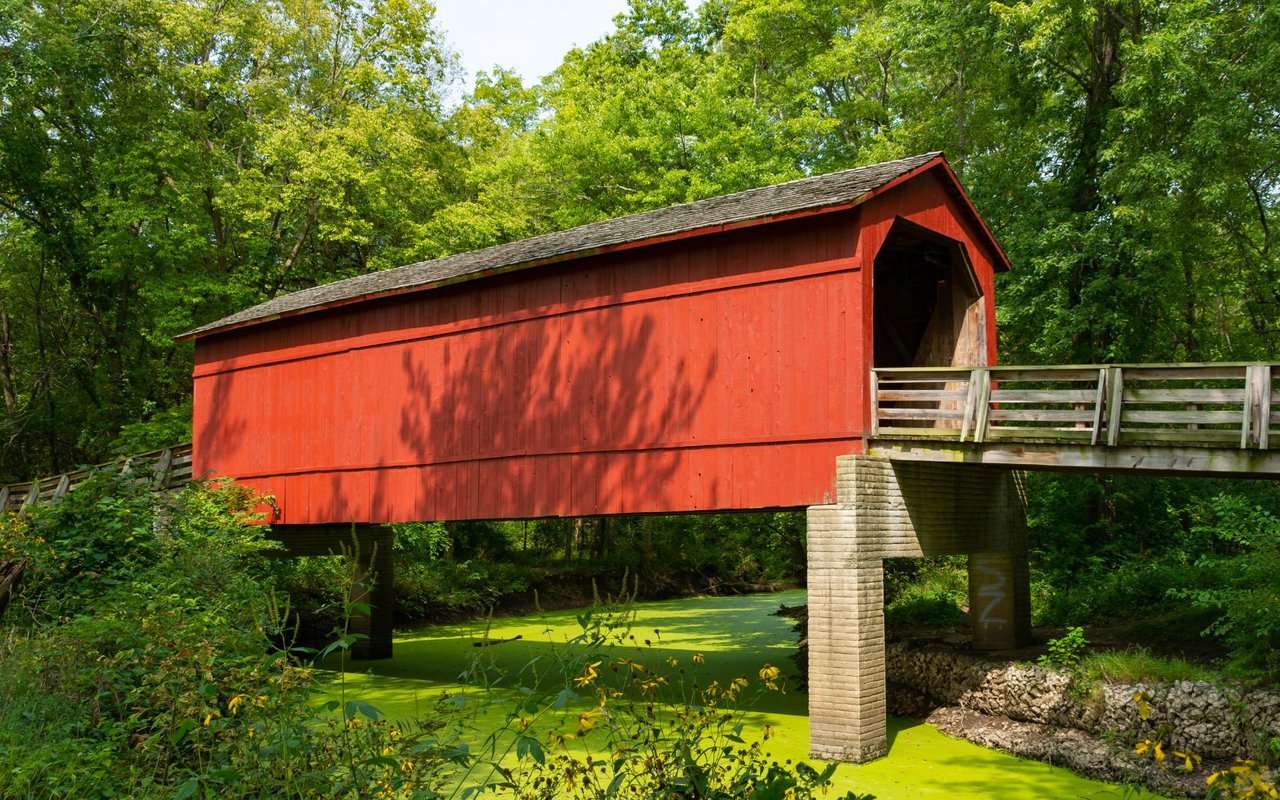
The Chatham Railroad Museum, housed in the restored 1902 depot at 100 N. State Street, is one of the village's most tangible historical landmarks. The depot served 12 passenger trains daily during Chatham's railroad peak and was closed in 1972 following the merger of Illinois Central and Gulf, Mobile & Ohio Railroads. The Sugar Creek Covered Bridge, one of only a small number of surviving covered bridges in Illinois, is located just outside the village near Glenarm and is accessible from Chatham as a local historical and scenic destination.
Chatham's entire identity as a residential community is built around its commute relationship with Springfield, which lies approximately 2.8 miles to the north. Illinois Route 4 is the primary corridor, running north through the village directly into the heart of Springfield. Most residents reach downtown Springfield, state government offices, and major employers in 15 to 25 minutes under normal traffic conditions. Interstate 55, which connects Springfield to St. Louis to the south and Chicago to the north, is accessible approximately 5 to 8 minutes east of Chatham via Veterans Parkway.
| Destination | Approximate Distance / Time | Route |
|---|---|---|
| Springfield downtown / State Capitol | 4 miles / 12–20 min | Illinois Route 4 north directly into Springfield |
| HSHS St. John's Hospital (Springfield) | 6 miles / 15–22 min | Route 4 north to Hospital Road |
| Memorial Medical Center (Springfield) | 7 miles / 18–25 min | Route 4 north to Wabash Avenue |
| Interstate 55 (southbound to St. Louis) | 5 miles / 8–12 min | Veterans Parkway east to I-55 |
| Abraham Lincoln Capital Airport (SPI) | 8 miles / 15–20 min | Route 4 north then northeast |
| St. Louis, MO | 78 miles / 75–90 min | I-55 south |
| Chicago, IL | 183 miles / 2.5–3 hr | I-55 north |
Public transit options within Chatham are limited. The village does not have a local bus system, and residents rely almost entirely on personal vehicles. Springfield's SMTD bus system operates several routes within Springfield that are accessible to Chatham residents who drive to Springfield park-and-ride points. Average commute time for Chatham residents is approximately 20 to 22 minutes, consistent with the short geographic distance to most Sangamon County employment centers. The largest employment sectors for Chatham residents are public administration at 19.5%, educational services at 16.3%, and healthcare and social assistance at 15.4%, reflecting the dominance of state government, healthcare, and education as Springfield metro employers.
Chatham's real estate market sits in a competitive and appreciating phase. The Redfin Compete Score for the village rates it as "most competitive," with most homes receiving multiple offers, many with waived contingencies, and the average home selling approximately 1% above list price with a median of around 14 days to pending. Median sale prices have been rising steadily, reaching approximately $351,000 in November 2025 — up 12.2% year-over-year — as demand from Springfield-area families seeking newer housing in a well-regarded school district continues to outpace supply.
| Property Segment | Market Character | Buyer Consideration |
|---|---|---|
| New construction single-family (active subdivisions) | Consistent demand; newest product in the market; builder pricing with little negotiation room | Most popular with young families; newer subdivisions include Bogey Hills, Panther Creek, and others along the village's growing edges |
| Established single-family (1980s–2000s) | Solid value; larger lots than newer builds in some cases; competitive multiple-offer situations on well-priced homes | Best value per square foot in the market; move-in-ready updates command fastest sales |
| Entry-level single-family | Homes below $250K attract strong first-time buyer demand; inventory thin | Buyers competing in this segment should be prepared to move quickly and consider waiving minor contingencies |
| Condos and townhomes | Limited inventory; not the dominant product type in the village | Options exist along the Route 4 corridor and near I-55; primarily appeals to downsizers and single buyers |
Chatham's real estate value proposition centers on the combination of Springfield-adjacent location, good schools, newer housing stock, and prices that remain well below the national median for comparable suburban communities. Property taxes at approximately 1.9% of assessed value are in line with Illinois averages and represent a significant carrying cost relative to some neighboring states, which buyers should factor into affordability calculations. New subdivision development along the village's southern and western edges continues to add inventory, which has kept prices from accelerating as rapidly as they might in a fully built-out community.
Chatham's appreciation has been steady rather than dramatic. NeighborhoodScout data shows a 10-year appreciation rate of approximately 50.57%, annualizing to roughly 4.18% — below Illinois averages for that period — but more recent quarterly data shows acceleration, with an annualized rate of 11.15% in the most recent quarter reported. The current market is competitive by any measure for a central Illinois community of this size.
Daily life in Chatham is oriented around family routines, school-centered community identity, and the practical convenience of being minutes from Springfield's full range of services. The village has its own commercial strip along Route 4, its own parks system, a community center, and a food pantry. Residents who want a quieter evening or weekend do not necessarily need to drive to Springfield to find it — but Springfield's restaurants, arts venues, Lincoln-related historical sites, and regional retail are accessible in under 20 minutes when they do.
The village's largest park, adjacent to several newer subdivisions along the southern edge of Chatham. Features open green space, walking paths, a playground, and picnic areas. Regularly cited by residents as a central gathering point for the community, especially for families with young children.
A village-operated facility providing meeting space, community programs, and local event hosting. The village also operates a senior center, food pantry, and library services that give the community a practical civic infrastructure beyond what many similarly sized villages maintain.
Housed in the restored 1902 depot at 100 N. State Street, the museum preserves the history of Chatham's railroad era, when 12 passenger trains daily passed through the village. The building was restored in 1991 and serves as one of the most distinctive historic landmarks in Sangamon County's suburban corridor.
An annual community event that draws residents and visitors from across the Springfield metro area. The festival reflects Chatham's agricultural heritage and is one of the most consistent community gathering events on the village's civic calendar.
Chatham sits on the original 1926 alignment of U.S. Route 66, now Illinois Route 4. The village is part of the broader central Illinois Route 66 scenic byway, with nearby landmarks including the Chatham Railroad Museum, the Apple Barn, the Sangamo Brewery and Museum, and the Sugar Creek Covered Bridge just south in Glenarm.
Springfield is approximately 2.8 miles north, providing Chatham residents access to the Abraham Lincoln Presidential Library and Museum, Dana-Thomas House, the Illinois State Fairgrounds, downtown dining and entertainment along 5th Street, the BOS Center arena, and a full range of regional retail and healthcare destinations.
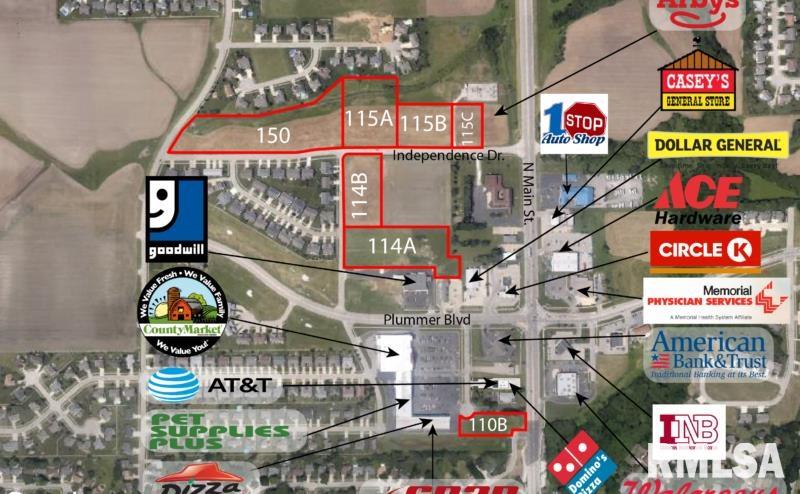
Chatham's immediate commercial amenities are concentrated along Illinois Route 4, which runs through the center of the village. Grocery, pharmacy, fast food, and everyday services are accessible without entering Springfield. For specialty retail, major shopping centers, larger restaurant selection, and cultural venues, Springfield is 15 to 20 minutes north and provides access to Scheels, White Oaks Mall, the Shoppes at College Hills, and a growing dining scene along the South Grand and Wabash corridors.
| Category | What's Available |
|---|---|
| Grocery | Aldi and other grocery options along the Route 4 / Veterans Parkway corridor in Chatham; Meijer, Walmart Supercenter, Schnucks, and ALDI locations accessible in Springfield within 10–15 minutes |
| Dining | Local restaurants, diners, and fast-food options along Route 4 in Chatham; Springfield's full dining range — including local standbys along South Grand and the downtown 5th Street Entertainment District — accessible in under 20 minutes |
| Healthcare | HSHS Medical Group Family Health clinic in Chatham; HSHS St. John's Hospital and Memorial Medical Center (both major full-service hospitals) in Springfield, approximately 15–22 minutes north; multiple urgent care, dental, and specialty practices accessible in the Springfield metro area |
| Shopping | Everyday retail and pharmacy along Route 4; White Oaks Mall, Scheels, Shoppes at College Hills, and a full complement of national and regional retail in Springfield within 15–20 minutes |
| Recreation | Southwinds Park, multiple neighborhood parks, village walking paths, Chatham Community Building; Lake Springfield (City Water, Light and Power recreation lake) accessible approximately 10 minutes away; Lincoln Memorial Garden and Nature Center on the Lake Springfield shore |
| Arts & Culture | Chatham Railroad Museum (local); proximity to Springfield's Abraham Lincoln Presidential Library and Museum, Dana-Thomas House, Illinois State Museum, and the Illinois Governor's Mansion; annual Sweet Corn Festival; Central Illinois arts and entertainment calendar accessible in Springfield year-round |
Lake Springfield, a 4,200-acre reservoir created by the City Water, Light and Power utility in the 1930s, is located approximately 10 minutes northeast of Chatham. The lake offers boating, fishing, a public beach at Bridgeview Beach, and shoreline recreation including the Lincoln Memorial Garden and Nature Center. It is one of the most used outdoor recreation assets accessible to Chatham residents and represents a significant quality-of-life amenity that the village's immediate footprint does not independently provide.
Chatham's residential landscape is predominantly made up of single-family subdivisions developed from the 1970s through the present. The village has grown outward from its original commercial core along Mulberry Street and Route 4, with newer developments pushing south and west. Most buyers choose between established subdivisions with mature trees and larger lots, and newer builds with more modern floor plans on smaller lots. The difference in feel between a 1990s subdivision and a 2015 or newer build is noticeable and worth evaluating in person.
One of Chatham's established residential subdivisions, named for the creek that historically defined the area's western boundary. Features a mix of single-family homes built from the 1990s through the 2000s, a community feel, and proximity to Chatham schools and the Route 4 commercial corridor.
A subdivision in the village offering newer homes on well-maintained streets, close to shopping, restaurants, and highway access to I-55 and I-72. Active new construction has continued in and around Bogey Hills, with 2024-built duplexes and single-family homes providing contemporary floor plans for families moving from Springfield.
Neighborhoods adjacent to Southwinds Park on the village's southern edge, popular with young families for their proximity to green space, walking paths, and playground access. Among the newer residential areas in the village, with recently constructed subdivision homes adding consistent new inventory.
The area around Mulberry Street and State Street retains some of Chatham's oldest residential stock, including homes dating to the late 19th and early 20th centuries. Closer to the historic depot museum and the village government offices, this area offers an older, more established streetscape compared to the newer subdivisions.
The northern edge of Chatham transitioning toward Springfield, with commercial services mixed alongside residential. Offers the shortest commute time into Springfield for residents who work in the northern part of the capital and the most immediate access to everyday retail and dining without entering Springfield proper.
Chatham continues to add new subdivisions along its southern and western edges. Active development includes new duplex and single-family builds in 2024 and 2025. Buyers seeking the newest construction with modern kitchens, open floor plans, and energy-efficient systems will find consistent new product entering the market each year.
| Area | Character | Best For |
|---|---|---|
| Panther Creek | Established, 1990s–2000s homes, community feel | Families wanting a mature subdivision with established neighbors and proximity to schools |
| Bogey Hills | Newer builds, I-55 access, active construction | Buyers seeking newer floor plans with highway access and shopping proximity |
| Southwinds Area | Park-adjacent, newer homes, young family concentration | Young families prioritizing park access and newer construction |
| Original Village Core | Historic, older housing stock, walkable to village services | Buyers who want historic character and walkable access to the depot museum and village offices |
| Route 4 North Corridor | Mixed use, commercial access, shortest Springfield commute | Commuters prioritizing the fastest Springfield access and immediate everyday convenience |
| Active Development Areas | New construction, modern floor plans, growing inventory | Buyers who want brand-new homes with builder warranties and contemporary design |
Chatham is served exclusively by Ball Chatham Community Unit School District No. 5, which provides a complete preK-through-12 public education within the village. The district serves approximately 4,516 students across a preK program, three elementary schools, an intermediate school, a middle school, and Glenwood High School. Ball Chatham is consistently cited as a primary reason families choose Chatham over other Springfield-area suburbs, and the district has received the Bright Star Award for educational excellence at both the elementary and high school level.
| School / District | Type / Grades | Notes |
|---|---|---|
| Ball Chatham Community Unit School District No. 5 | Public PreK–12; approximately 4,516 students; 16:1 student-teacher ratio | Recipient of Bright Star Award for educational excellence; serves Chatham, Glenarm, and portions of southern Springfield; Niche overall district grade B |
| Glenwood Elementary School | Public K–4; Ball Chatham CUSD 5 | Located at 1401 E. Plummer Blvd; ranked approximately 233rd of 2,056 Illinois elementary schools by SchoolDigger for 2024–2025; Bright Star Award recipient |
| Chatham Elementary School | Public K–4; Ball Chatham CUSD 5 | Ranked approximately 227th of 2,056 Illinois elementary schools by SchoolDigger for 2024–2025; serves the western portion of the village |
| Glenwood Intermediate School | Public 5–6; Ball Chatham CUSD 5 | Provides transitional programming between elementary and middle school; part of the district's continuous preK–12 pipeline within the village |
| Glenwood Middle School | Public 7–8; Ball Chatham CUSD 5; 771 students | 17:1 student-teacher ratio; Niche grade B; ranked approximately 375th of Illinois public middle schools |
| Glenwood High School | Public 9–12; Ball Chatham CUSD 5; enrollment 1,468 (2023–24) | Ranked 70th of 698 Illinois high schools by SchoolDigger for 2024–2025; ranked 105th in Illinois by U.S. News; Niche grade A-minus; 17:1 student-teacher ratio; 66% of 11th graders proficient in English Language Arts, 51.6% in math, 61.6% in science; AP and dual-credit courses available; UDA All-American Dance Team; Bright Star Award recipient |
Private and parochial school options are available in Springfield, which is accessible in under 20 minutes for families who choose alternatives to the public district. Lincoln Land Community College, located in Springfield, provides local access to higher education, workforce training, and associate degree programs. The University of Illinois Springfield campus is also accessible to Chatham residents, approximately 15 to 20 minutes north.
Glenwood High School's ranking of 70th out of 698 Illinois high schools by SchoolDigger places it in the top 10% statewide. The school offers AP coursework, dual-credit opportunities, an honors track, and a strong athletic and extracurricular calendar including a nationally recognized dance team. The district's single preK–12 school system means Chatham residents have a fully self-contained public education option without school choice complexity.
Chatham's investment case is grounded in consistent demand from Springfield-area families who want newer housing, better school district access, lower crime, and the practical convenience of a village-scale community without sacrificing access to a state capital's employment base. The village is not a high-appreciation luxury market, but it is a fundamentally stable one, with a growing population, consistent new construction activity, low vacancy, and a median household income well above state and national averages that supports sustained buyer demand.
| Market Snapshot (Late 2025) | |
|---|---|
| Median sale price (Nov 2025) | $351,000 |
| YoY price growth (Nov 2025) | +12.2% |
| Average home value (Zillow) | $291,682 (+7.9% YoY) |
| Median price per sq ft (Feb 2025) | $128 |
| Effective property tax rate | ~1.9% of assessed value |
| Investment Fundamentals | |
|---|---|
| Population trend | Growing; +2.33% since 2020 Census; projected continued growth |
| Median household income | $106,773 (well above Illinois median) |
| Primary employer base | State government, healthcare, education (Springfield) |
| Single-family housing share | 77.4% of all housing units |
| New construction activity | Active; ongoing subdivision development adds annual inventory |
The Springfield metro economy is anchored by state government employment, which provides a stable but not rapidly growing base for residential demand. Healthcare and education are the other two dominant employment sectors, and both HSHS St. John's Hospital and Memorial Medical Center are major employers drawing professional households who commonly choose Chatham for its school district and village character. Investors purchasing rental property in Chatham benefit from consistently low vacancy rates, strong demand from families relocating for state government or healthcare employment, and low competition from institutional investors who rarely focus on markets of this scale.
Illinois property taxes are a material factor in Chatham's ownership cost. The effective rate of approximately 1.9% on assessed value means a $300,000 home carries roughly $5,700 in annual property taxes — a figure that affects both affordability calculations for buyers and net yield calculations for investors. This rate is in line with broader Illinois averages and should be verified for specific parcels via the Sangamon County Assessor's office prior to purchase.
Chatham draws a consistent type of relocator: families moving from within the Springfield metro who want more house, a better school district, and a quieter residential environment, and professionals relocating to the Springfield area for state government, healthcare, or university positions who want the practical combination of a short commute and a family-oriented community. The village's motto of "Where Families Grow" is an accurate description of who chooses it and why they stay.
Ball Chatham CUSD 5 provides a complete preK–12 public education within the village, with Glenwood High School ranked in the top 10% of Illinois public high schools. The single-district, self-contained school system eliminates the school choice complexity that some neighboring communities require.
Illinois Route 4 puts downtown Springfield, the State Capitol, HSHS St. John's Hospital, Memorial Medical Center, and the University of Illinois Springfield within 15 to 22 minutes. The commute is genuinely short by any standard, and I-55 access provides flexibility for travel south to St. Louis or north toward Chicago.
A median home sale price around $291,000 to $351,000 depending on the data source provides access to newer single-family homes in a growing community at prices well below the national median for comparable suburban housing stock. Entry-level buyers and first-time homeowners find more options here than in most Illinois suburbs of similar school district quality.
State government is Chatham's single largest employment sector by resident occupation, at 19.5% of the workforce. The Springfield proximity, low crime, strong schools, and relatively affordable housing make Chatham a natural landing point for employees at state agencies, the legislature, the Governor's Office, and associated public sector organizations.
Healthcare at 15.4% and educational services at 16.3% together represent nearly a third of Chatham's employed population. Proximity to HSHS St. John's, Memorial, the Springfield Clinic, and the University of Illinois Springfield and Lincoln Land Community College makes Chatham a practical residential choice for professionals in these fields.
Chatham provides an accessible introduction to the Springfield metro for buyers arriving from larger coastal or Midwestern metro areas. The village offers newer housing stock, a safe environment, well-regarded public schools, and Springfield's historical and cultural attractions — including the Abraham Lincoln Presidential Library and Museum — within a 20-minute drive.
Where is Chatham, IL located?
Chatham is a village in Sangamon County, Illinois, located approximately 2.8 miles south of Springfield along Illinois Route 4, which follows the original 1926 alignment of U.S. Route 66. It is part of the Springfield Metropolitan Statistical Area and sits about 78 miles northeast of St. Louis and 183 miles southwest of Chicago.
What are the schools like in Chatham?
Chatham is served by Ball Chatham Community Unit School District No. 5, which covers preK through grade 12 entirely within the village. Glenwood High School is ranked 70th of 698 Illinois high schools by SchoolDigger for 2024–2025, placing it in the top 10% statewide. The district has received the Bright Star Award for educational excellence and offers AP coursework, dual-credit programs, and a 17:1 student-teacher ratio at the high school level.
How far is Chatham from Springfield?
Approximately 2.8 miles by road via Illinois Route 4. Most residents reach downtown Springfield, the State Capitol, or major employers within 15 to 22 minutes under normal weekday traffic conditions. I-55 is accessible approximately 5 to 8 minutes east via Veterans Parkway.
What is the real estate market like in Chatham?
Redfin rates Chatham as "most competitive," with most homes receiving multiple offers and the average home selling approximately 1% above list price with a median of around 14 days to pending. The median sale price in November 2025 was approximately $351,000, up 12.2% year-over-year. The average home value per Zillow is $291,682, up 7.9% over the past year. Property taxes run approximately 1.9% of assessed value, which is in line with Illinois averages.
Is Chatham a safe place to live?
Yes. Chatham has a poverty rate of 3.3% — well below both state and national averages — and residents consistently describe it as a low-crime, family-oriented community. Niche and resident reviews regularly reference safety as one of the primary reasons families choose Chatham over neighborhoods within Springfield proper.
What is the history of Chatham, Illinois?
The village received its name on October 22, 1836, taking the name from the Chatham Presbyterian Church organized the previous year. The post office opened in 1840 as "Lick Creek" before being renamed Chatham in 1841. The railroad reached the village in 1852, and Chatham was formally incorporated in 1874. U.S. Route 66 was aligned through the village in 1926 before being realigned to bypass Chatham in 1930. The 1902 railroad depot, restored in 1991, survives as the Chatham Railroad Museum at 100 N. State Street.
What types of homes are available in Chatham?
Single-family detached homes make up approximately 77.4% of the village's housing units. The market ranges from older homes in the original village core dating to the late 1800s and early 1900s, through established subdivisions from the 1980s through 2000s, to active new construction on the village's southern and western edges. New duplexes and single-family homes were actively under construction in 2024 and 2025 in subdivisions including Bogey Hills and areas near Southwinds Park.
What outdoor recreation is accessible from Chatham?
Within the village, Southwinds Park and multiple neighborhood parks provide walking paths, playgrounds, and green space. Lake Springfield, a 4,200-acre reservoir approximately 10 minutes northeast, offers boating, fishing, a public beach at Bridgeview Beach, and the Lincoln Memorial Garden and Nature Center along its shoreline. The Lincoln Memorial Garden is a 100-acre native plant garden on the lake's eastern shore and is open year-round at no charge.
15,369 people live in Chatham, where the median age is 35.7 and the average individual income is $47,336. Data provided by the U.S. Census Bureau.
Total Population
Median Age
Population Density Population Density This is the number of people per square mile in a neighborhood.
Average individual Income
There's plenty to do around Chatham, including shopping, dining, nightlife, parks, and more. Data provided by Walk Score and Yelp.
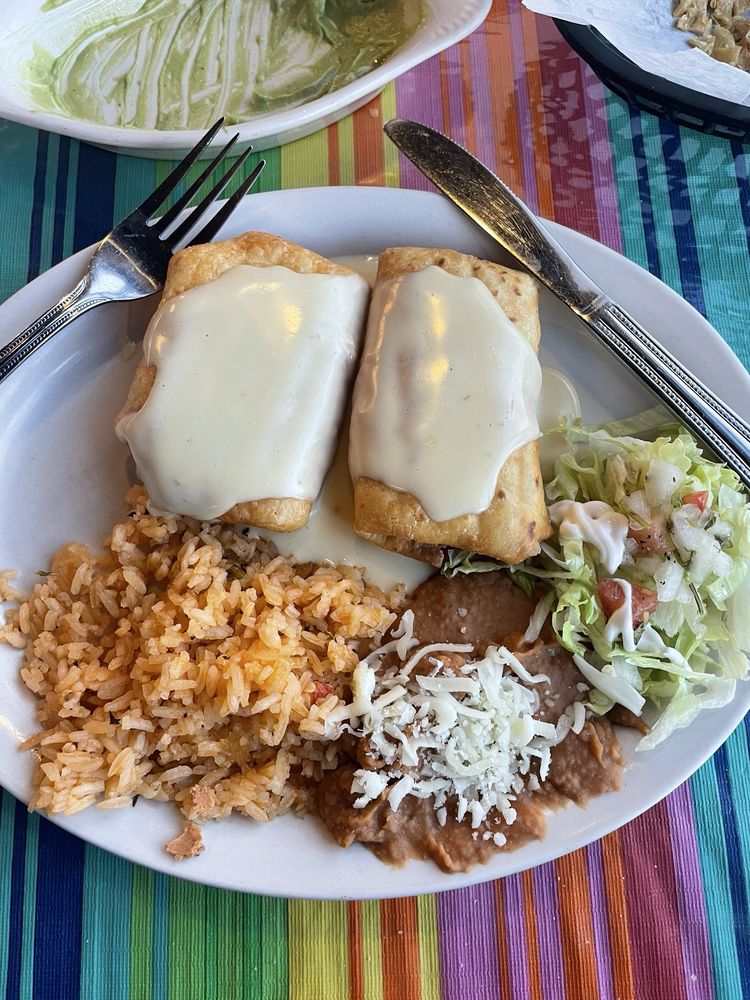
Explore popular things to do in the area, including Chatham Shell, Mas Sabores, and SauceHouse Wings & Fish.
| Name | Category | Distance | Reviews |
Ratings by
Yelp
|
|---|---|---|---|---|
| Dining | 0.78 miles | 0 reviews | 0/5 stars | |
| Dining | 0.78 miles | 18 reviews | 4.2/5 stars | |
| Dining | 0.79 miles | 0 reviews | 0/5 stars | |
| Dining | 0.79 miles | 1 review | 5/5 stars | |
| Dining | 0.79 miles | 1 review | 5/5 stars | |
| Dining | 0.79 miles | 10 reviews | 4.2/5 stars | |
| Dining · $ | 0.8 miles | 58 reviews | 3.7/5 stars | |
| Active | 0.68 miles | 0 reviews | 0/5 stars | |
| Active | 0.68 miles | 0 reviews | 0/5 stars | |
| Active | 0.7 miles | 1 review | 5/5 stars | |
| Active | 0.74 miles | 1 review | 5/5 stars | |
| Active | 0.74 miles | 0 reviews | 0/5 stars | |
| Active | 0.75 miles | 0 reviews | 0/5 stars | |
| Active | 0.75 miles | 0 reviews | 0/5 stars | |
| Active | 0.8 miles | 0 reviews | 0/5 stars | |
| Beauty | 0.68 miles | 0 reviews | 0/5 stars | |
| Beauty | 0.68 miles | 1 review | 5/5 stars | |
| Beauty | 0.71 miles | 2 reviews | 5/5 stars | |
| Beauty | 0.73 miles | 0 reviews | 0/5 stars | |
| Beauty | 0.74 miles | 0 reviews | 0/5 stars | |
| Beauty | 0.74 miles | 0 reviews | 0/5 stars | |
| Beauty | 0.75 miles | 1 review | 5/5 stars | |
| Beauty | 0.78 miles | 17 reviews | 2.9/5 stars | |
| Beauty | 0.8 miles | 2 reviews | 5/5 stars | |
|
|
||||
|
|
||||
|
|
||||
|
|
||||
|
|
||||
|
|
Chatham has 5,924 households, with an average household size of 2.59. Data provided by the U.S. Census Bureau. Here’s what the people living in Chatham do for work — and how long it takes them to get there. Data provided by the U.S. Census Bureau. 15,369 people call Chatham home. The population density is 440 and the largest age group is Data provided by the U.S. Census Bureau.
Total Population
Population Density Population Density This is the number of people per square mile in a neighborhood.
Median Age
Men vs Women
Population by Age Group
0-9 Years
10-17 Years
18-24 Years
25-64 Years
65-74 Years
75+ Years
Education Level
Total Households
Average Household Size
Average individual Income
Households with Children
With Children:
Without Children:
Marital Status
Blue vs White Collar Workers
Blue Collar:
White Collar:
Explore Our Springfield, IL Communities